Wing It SSTO Spaceplane Guide
Build single-stage high-altitude craft that fund moon attempts without staging drama or ego climbs.
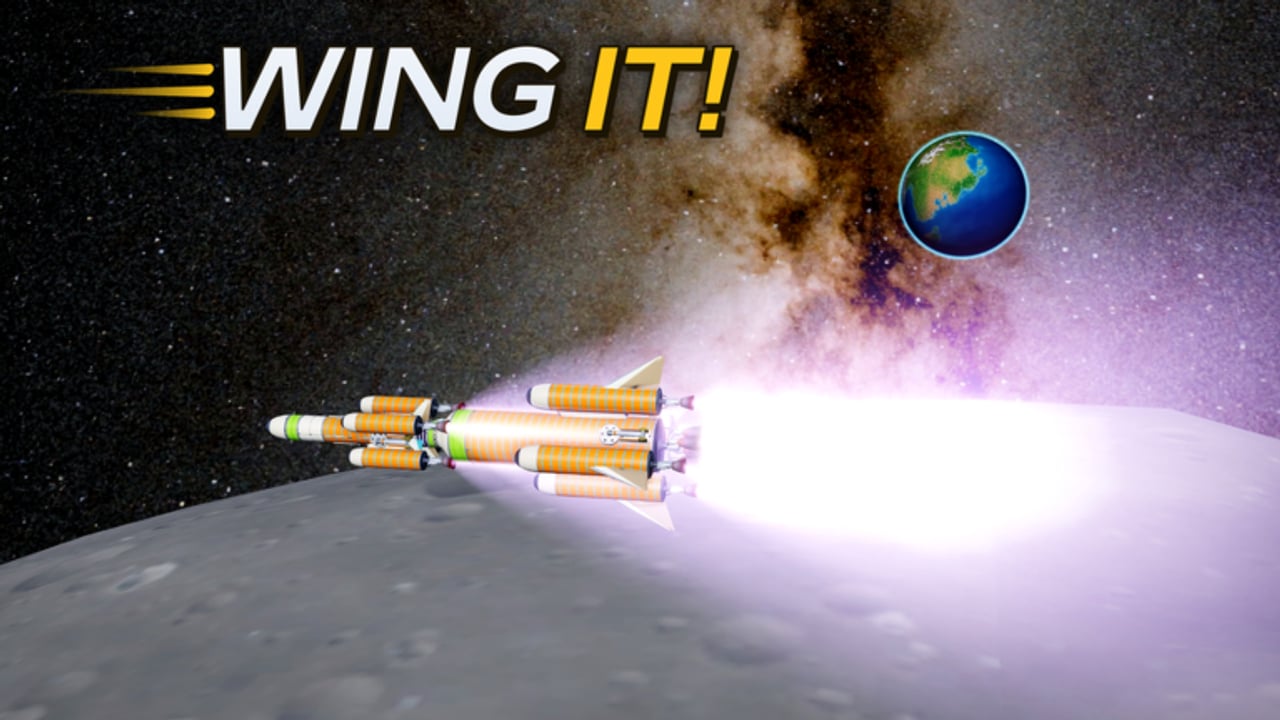
SSTO is not a costume in Wing It — it is a design promise. In [SSTO + WEAPONS] Wing It! by catIoaf, the title itself advertises the fantasy: climb from runway air into the thin stuff, keep the same airframe intact, and still have fuel and control left for the bridge toward lunar work. This guide teaches the single-stage-to-orbit mindset as Wing It actually plays it — a high-altitude, high-discipline spaceplane habit — not a Kerbal checklist you recite from memory. Pair it with Wing Design, Cargo Planes, and the moon walkthrough on Moon Landing.
What SSTO means here
On Roblox place 82017132357646, physics are KSP-inspired but the session is still a ~20-player lobby with cargo contracts, rivals, and career tabs. An SSTO in this wiki sense is a craft that:
- Leaves the runway under its own power without jettison theater you cannot manage mid-climb.
- Transitions from air-breathing intuition into rocket / high-altitude thrust without losing attitude control.
- Retains a usable fuel fraction after the hard climb — enough to practice transfer thinking, not just kiss the sky and fall.
- Comes home (or coasts onward) with landing gear that still works when the atmosphere is gone or thin.
You are not graded on whether a forum called it “true SSTO.” You are graded on whether the craft still answers the stick when air density drops and whether the tanks are not empty before the interesting part starts.
Prerequisites (skip these and you buy craters)
- Cargo money — SSTOs are expensive experiments. Fund them with a dedicated hauler from Cargo Planes. Roblox Plus (+20% money) speeds part unlocks; it does not invent fuel.
- Stable landings — If every atmospheric arrival is a tip-over lottery, vacuum legs will not save you. Drill patterns from Controls and specialty pads like Eye of the Storm first.
- Wing design literacy — Know normal wings vs tailplane elevators, thrust lines, and CG shifts. Read Wing Design before you stack tanks on a pretty silhouette.
- Career patience — Ranks on Career Ranks reward finished work. One viral climb screenshot does not replace a funded hangar.
Save the money plane as its own file. Never launch CARGO_MAIN as your first vacuum toy.
Design principles that actually matter
Fuel fraction over vanity hardpoints
Mass spent on guns, bomb racks, and cosmetic spines is mass that is not propellant. First-gen SSTOs should look slightly boring: tanks, engines, wings that earn their drag, gear that stands. Weapons belong on fighters and bombers ranked on Best Planes. Moonbeam mass is a later retrofit, not a day-one requirement.
Air-breathing then rocket / high-alt thrust thinking
Climb where intakes still help, then commit to the high-altitude push with engines that still bite when air thins. If your only thrust mode dies the moment density drops, you built a high-flying cargo plane — useful, but not a moon bridge. Place engines symmetrically; asymmetric yaw at altitude is how tip-over stories begin long before touchdown.
Wing area vs drag
You need enough wing to rotate and climb without stalling into a parking lot, but excess area becomes a parachute during the energetic push. Oversized drag wings punish every second of high-alt burn on the path toward Moon Landing. Iterate area in named saves: change one variable per hop.
Gear for the return (and for lunar practice)
Widen the track, lower the CG, and confirm legs still clear control surfaces through pitch. Tip-over landings after a “successful” climb waste more career time than a clean abort. Treat gear as mission-critical structure, not an afterthought glued on at the door.
Ascent profile habits
Pitch discipline beats vertical ego climbs. A straight-up firework looks dramatic in a ~20-player server and wastes energy sideways into drag and stall risk.
Practical climb habits:
- Rotate clean, establish a climb you can trim, and watch energy — not just altitude numbers.
- Keep inputs small (Controls). Yanking for “more vertical” often trades speed for a mushy stall at the worst height.
- Stabilize before you ask for the high-alt push. Porpoising through the transition dumps fuel into attitude recovery.
- When air thins, confirm you still have steering authority before you commit the remaining tanks.
- Abort early if the craft will not hold attitude. A living hangar craft beats a viral wreck cam.
Think energy management: speed and altitude as a budget you spend toward the moon bridge, not a scoreboard to max in the first two minutes.
Failure modes (visit the museum often)
| Failure | What it usually means | Hangar fix |
|---|---|---|
| Stall at altitude | Too little energy, too much pitch, or wings fighting you | Shallower climb, less drag area, practice recovery |
| Fuel dry before the “apoapsis feel” | Optimistic tanks or wasteful burns | More fraction, fewer vanity parts, calmer ascent |
| Tip-over on landing | High CG, narrow gear, leftover side speed | Widen stance, lower mass, null lateral drift |
| Spin / yaw drama on climb | Asymmetric thrust or weak control habit | Mirror engines, centerline bias, yaw drills |
| Import that softlocks after a patch | Stale share code or changed parts | Re-test via Catalog Codes, read Updates |
Most “SSTO is impossible” rants are one of the rows above wearing a louder hat.
How SSTO ties to moon, Moth, and career
SSTO mastery is the practical on-ramp to Moon Landing and the Moth unlock talk that follows a real touchdown. Career tabs reward altitude and lunar milestones alongside cargo and specialty landings — so treat spaceplane practice as promotion fuel, not only as a sandbox flex. After a clean high-alt profile:
- Save the craft under a versioned name.
- Decide whether the next edit is more tankage, better legs, or a stripped transfer stack.
- Keep cargo income running so ranks on Career Ranks do not stall while you tinker.
- Only then chase Moonbeam experiments once the lander already survives.
Exact Career UI wording can shift with patches. Confirm gates in-game after big Updates rather than trusting a month-old screenshot.
Catalog study vs inventing from scratch
Community share codes are classrooms. Search the hangar catalogue for spaceplane and bomber study layouts — the well-known bomber string QL-RTY7-2K teaches nacelles, wing typing, and structural honesty even when your goal is SSTO rather than flagship DPS. Workflow lives on Catalog Codes and How to Redeem.
Rules of study:
- Import a copy; never overwrite your only money plane.
- Fly empty before you trust the tanks.
- Rebuild the lessons into a craft with your name on the tab.
- Re-verify after every physics or parts patch.
Inventing from scratch is fine once you can name why each wing panel and tank exists. Blind catalogue hopping without understanding produces the same crater with nicer paint. Traditional promo gift codes remain unverified as of late November 2026 (Codes Hub) — catalog strings clone layouts; they do not print cash.
Session plan you can finish tonight
- Warm up with one cargo contract so the wallet and hands are awake (Getting Started priorities still apply).
- Open the SSTO save; change one variable (tank count, wing area, or gear track).
- Climb with pitch discipline; abort if attitude fails.
- Land or glide home; write one note in the filename (
SSTO_v3_moreTank). - If the profile felt honest, schedule a moon-prep flight using Moon Landing phases — do not skip straight from a shaky climb to a full lunar bet.
Related pages
Guides Hub · Getting Started · Controls · Wing Design · Cargo Planes · Moon Landing · Moonbeam · Best Planes · Catalog Codes · Career Ranks · Updates · Codes Hub
Build the boring climb that still has fuel left. The moon postcard is downstream of that discipline.
Frequently Asked Questions
Quick answers to the most common Wing It questions.
What does SSTO mean in Wing It?
A single-stage high-altitude / spaceplane mindset: one intact airframe from runway through thin air with fuel and control left for moon-bridge work — not a rigid Kerbal badge checklist.
Do I need an SSTO before attempting a moon landing?
SSTO-style craft are the intended bridge for many pilots, but the real gates are fuel margin, attitude control, and landing gear. Follow Moon Landing.
Why do I stall every time I pull vertical?
Ego climbs dump energy into drag. Use a shallower, trimmed ascent and fix wing area or thrust before blaming the game.
Should I copy catalog SSTOs or design my own?
Study imports via Catalog Codes (for example bomber layout QL-RTY7-2K for structure lessons), then rebuild the ideas into your own named save.
Are there promo codes that unlock SSTO parts?
No verified traditional promo codes are known as of late November 2026. Fund parts with cargo and Roblox Plus; see Codes Hub.